The Rise & Characteristics of Urbanisation (Edexcel IGCSE Geography): Exam Questions

Exam code: 4GE1

1 hour21 questions
11 mark

Study Figure 6 which shows the location of nine urban regeneration projects in the centre of Sheffield, UK.

Map showing urban redevelopment zones in a city with key locations marked, including retail, leisure, business, and residential areas, along the River Don.

What is the approximate distance between the sites of project 4 and project 8?

  • 1.3 km

  • 1.8 km

  • 2.3 km

  • 2.8 km

2a1 mark

Study Figure 6, which shows information about Chinese cities in 1980 and Chinese megacities in 2015.

Map of China showing urban populations in millions for major cities in 2015. Includes a table of urbanisation percentages from 1980 to 2015.

How many megacities were there in China in 2015?

2b2 marks

Identify the evidence in Figure 6 that China has experienced rapid urbanisation.

31 mark

What is the minimum population of a mega-city?

  • 6 million

  • 8 million

  • 10 million

  • 12 million

41 mark

Identify the meaning of the term urbanisation.

  • increasing proportion of people living in urban areas

  • population movement from one country to another

  • increasing population growth on the edge of urban areas

  • population movement from one urban area to another

51 mark

Identify the meaning of the term counter-urbanisation.

  • increasing proportion of people living in urban areas

  • population movement from one country to another

  • increasing population growth on the edge of urban areas

  • population movement from urban areas to the countryside

61 mark

Identify the meaning of the term megacity.

  • a very large urban area

  • a city with a population over 1 million

  • a city with a population over 10 million

  • a very large rural area

71 mark

Identify one characteristic of a squatter settlement.

  • a location that has previously been built on

  • a location that has high-rise development

  • a location that has illegally built housing

  • a location that has a planned housing development

81 mark

State one reason why suburbanisation occurs.

91 mark

Identify which one of the following cities is a megacity.

  • Bogota, Colombia – 7.4 million

  • Lahore, Pakistan – 11.1 million people

  • Zhengzhou, China – 6.7 million people

  • Chattogram, Bangladesh – 5.4 million people

101 mark

State one source of air pollution in cities.

113 marks

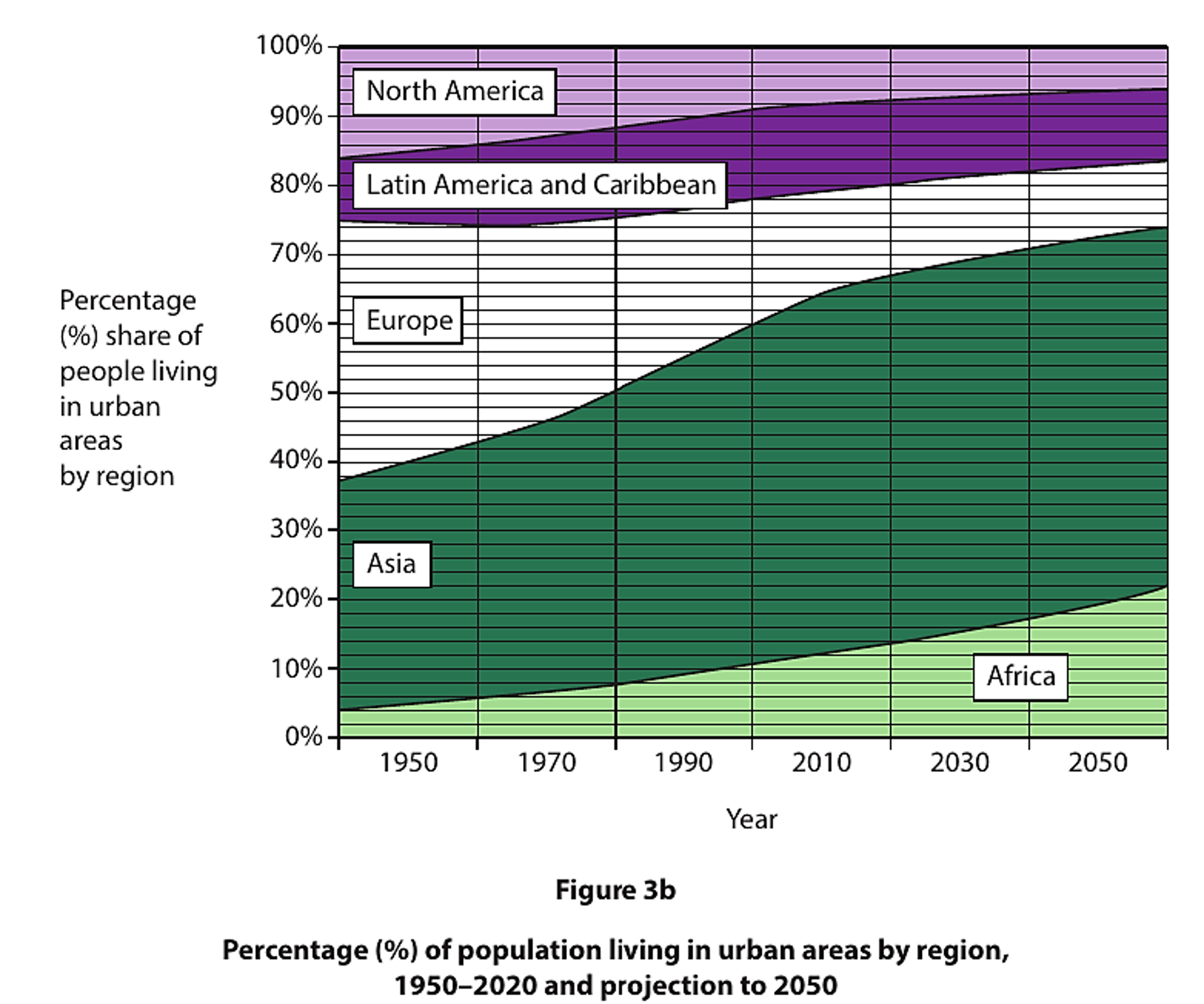
Study Figure 3b.

Stacked area graph showing urban population percentages by region from 1950 to 2050, highlighting Asia, Africa, Europe, North America, and Latin America.

Suggest one reason for a trend shown.

14 marks

Explain two reasons why urban land use patterns vary.

24 marks

Explain two factors that affect the rate of urbanisation.

34 marks

Explain two factors that have led to the emergence of megacities.

44 marks

Explain two ways urbanisation can sometimes cause housing challenges in cities that are growing rapidly.

53 marks

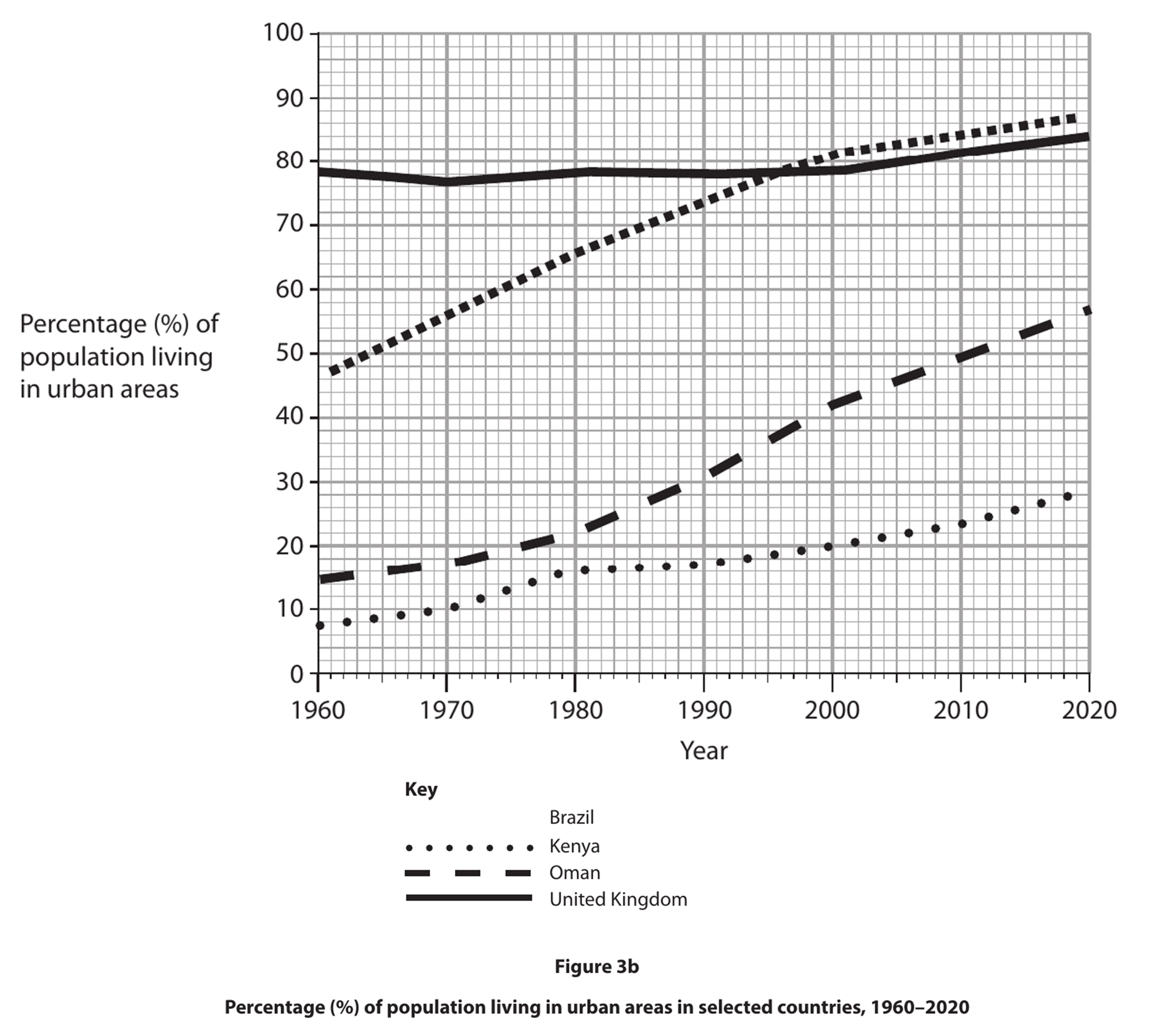
Study Figure 3b.

Line graph showing urban population percentages from 1960 to 2020 for Brazil, Kenya, Oman, and UK with varying trends.

Suggest one reason for a trend shown.

18 marks

Discuss why a population is distributed according to its socio-economic and ethnic background in one named city. 

28 marks

Study Figure 3c below.

Bar chart showing global urban and rural population trends from 1950 to 2030. Urban population rises, rural decreases, and total population grows steadily.

Analyse the reasons for the changes in the global urban population.

38 marks

Study Figure 3c.

World map showing largest cities by population in 2015. Red dots indicate cities over 10 million, orange dots for cities between 5 and 10 million.

Analyse the reasons for the distribution of the world’s largest cities.

48 marks

Analyse the reasons for the rapid rise of megacities and the issues associated with urbanisation.

58 marks

Study Figure 3c below.

Bar chart of world population from 1950 to 2030, showing urban population increasing and surpassing rural population around 2015.

Analyse the trend in global urbanisation over time.