1
4 marks
Read the following extracts (E to H) (opens in a new tab) before answering.
Using the data in Extract H, explain one long-term benefit to Unilever of adopting a corporate social responsibility strategy.
Was this exam question helpful?
Exam code: 9BS0
Read the following extracts (E to H) (opens in a new tab) before answering.
Using the data in Extract H, explain one long-term benefit to Unilever of adopting a corporate social responsibility strategy.
Was this exam question helpful?
Read the following extracts (E to H) (opens in a new tab) (opens in a new tab)before answering.
Using the data in Extract G, explain why Toyota's Model AA share scheme could help solve the problem of short-termism within the business.
Was this exam question helpful?
Read the following extracts (D to G) (opens in a new tab) before answering.
Using the information in Extract G, explain one difficulty Sports Direct may face in changing the business culture at its Shirebrook facility.
Was this exam question helpful?

Read the following extracts (D to G) (opens in a new tab) before answering.
Using the information in Extract G, explain one implication for PepsiCo of continuing to source its Tropicana orange juice from Citrosuco.
Was this exam question helpful?
Read the following extracts (D to G) (opens in a new tab) before answering.
Explain how one of Taco Bell's internal stakeholders may have an impact on its growth strategy in Brazil.
Was this exam question helpful?
Read the following extracts (E to H) (opens in a new tab) before answering.
Assess the likely value of Corporate Social Responsibility to a business, such as Cadbury.
Was this exam question helpful?
Read the following extracts (A to D) (opens in a new tab) before answering.
Assess two ways in which the decision to be a socially responsible business is likely to have increased Warby Parker’s profits.
Was this exam question helpful?
Read the following extracts (D to G) (opens in a new tab) before answering.
Assess the likely consequences for Sports Direct of its corporate culture.
Was this exam question helpful?
Read Extracts D to H (opens in a new tab)before answering.
Assess the likely importance of corporate social responsibility (CSR) as an influence on German Automotive’s (GA) business decisions.
Was this exam question helpful?
Read the following extracts (E to H) (opens in a new tab) before answering.
Unilever’s chief executive believes that Unilever should aim to consider all of its stakeholders in its main business decisions. Some business analysts believe that Unilever should instead consider an aim of focusing purely on its shareholders.
Evaluate these two aims and recommend which is most suitable for a business such as Unilever.
Was this exam question helpful?
Read the following extracts (A to D) (opens in a new tab) before answering.
Health and fitness clubs in the UK have high levels of labour turnover. To reduce this, health and fitness chains could offer either better financial rewards or use non-financial techniques to improve employee performance.
Evaluate these two options and recommend which one a health and fitness club, such as Fitness First, should adopt to reduce labour turnover.
Was this exam question helpful?
Read the following extracts (A to D) (opens in a new tab) before answering.
Ian Reid believes that the Commonwealth Games’ directors’ objectives should be to prioritise jobs and investment when making business decisions. However, others have suggested that the objectives should meet the needs of all stakeholders.
Using the data in Extracts A to D, evaluate these two objectives and recommend which is more appropriate for the 2022 Commonwealth Games’ Directors.
Was this exam question helpful?
Read extracts A to D before answering questions
Extract A
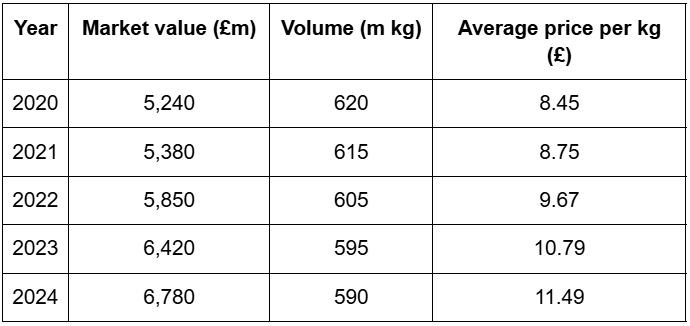
UK chocolate and sugar confectionery market data (2020-2024)
The UK market has grown in value from £5.24bn (2020) to £6.78bn (2024), but volume sales fell from 620 million kg to 590 million kg. Value growth reflects price rises, not increased demand. Average price per kg rose 36% since 2020, driven by commodity inflation and supply chain disruptions in 2022-23.
Volume decline was most pronounced in sugar confectionery due to health concerns. Premium and dark chocolate outperformed milk chocolate.
Source: adapted from Kantar Worldpanel UK Confectionery Report 2024
Extract B
Mondelez to close Cadbury factory in Ireland with loss of 400 jobs
Mondelez International will close its Cadbury facility in Rathmore, Ireland, with 400 job losses. The 50-year-old factory produces Cadbury Dairy Milk bars and seasonal products for UK and Irish markets.
The company cited changing consumer preferences, overcapacity in its European network, and efficiency needs. Production will consolidate into larger Birmingham and Poland facilities where Mondelez has invested in automation.
"This was an incredibly difficult decision," said a Mondelez spokesperson. "We must adapt our manufacturing footprint to remain competitive." Unions and politicians criticised the closure.
Industry experts note this reflects broader rationalisation. Similar Nestlé and Mars closures across Europe show companies seeking economies of scale while responding to declining volumes in mature markets.
Source: adapted from BBC News, The Irish Times, Food Manufacture (January 2025)
Extract C
The rise of functional and better-for-you confectionery
Consumer preferences are shifting towards products with functional benefits or health credentials. Research shows 42% of UK consumers seek reduced-sugar confectionery, while 38% want products fortified with vitamins or protein.
Major brands have launched lower-sugar variants using alternative sweeteners or reduced portions. Start-ups offer protein-enriched chocolate, sugar-free sweets, and vegan chocolate made with oat or coconut alternatives.
These products command 30-50% price premiums. However, taste remains the primary purchase driver, and reformulated products must deliver on flavour.
Mintel predicts functional and better-for-you products will reach 15-18% of the UK market by 2028, up from 8% in 2024. Success requires balancing health credentials with taste while managing costs.
Source: adapted from Mintel UK Confectionery Market Report 2024
Extract D
UK sugar tax extended to confectionery sector
The UK government announced plans to extend sugar taxation beyond soft drinks to include confectionery, targeting childhood obesity. The proposed levy, effective April 2027, will apply to chocolate, sugar confectionery, and sweet biscuits containing over 5g sugar per 100g.
Products will be categorised into two bands:
Band 1: 5-10g sugar per 100g - 18p levy per 100g
Band 2: Over 10g sugar per 100g - 24p levy per 100g
The government estimates the tax could raise £500m annually for children's health programmes. Public health organisations welcomed the move, citing links between sugar consumption and obesity, diabetes, and dental problems.
The confectionery industry strongly criticised the proposals. The Food and Drink Federation warns the levy will disproportionately impact smaller manufacturers lacking reformulation resources. Major manufacturers will likely pass costs to consumers through higher prices, potentially reducing demand and causing job losses.
Retailers are concerned about administrative burdens and sales impact. Trade unions fear job losses if the tax leads to factory closures or overseas production shifts.
Source: adapted from UK Government press release, The Guardian, Food Manufacture (December 2024)
With reference to Extract B and other information from the confectionery industry, evaluate the extent to which Mondelez has met its corporate social responsibilities in deciding to close its Rathmore factory.
Was this exam question helpful?